
No products in the cart.
Uncategorized
States Where Psilocybin Is Decriminalized
22
May
May
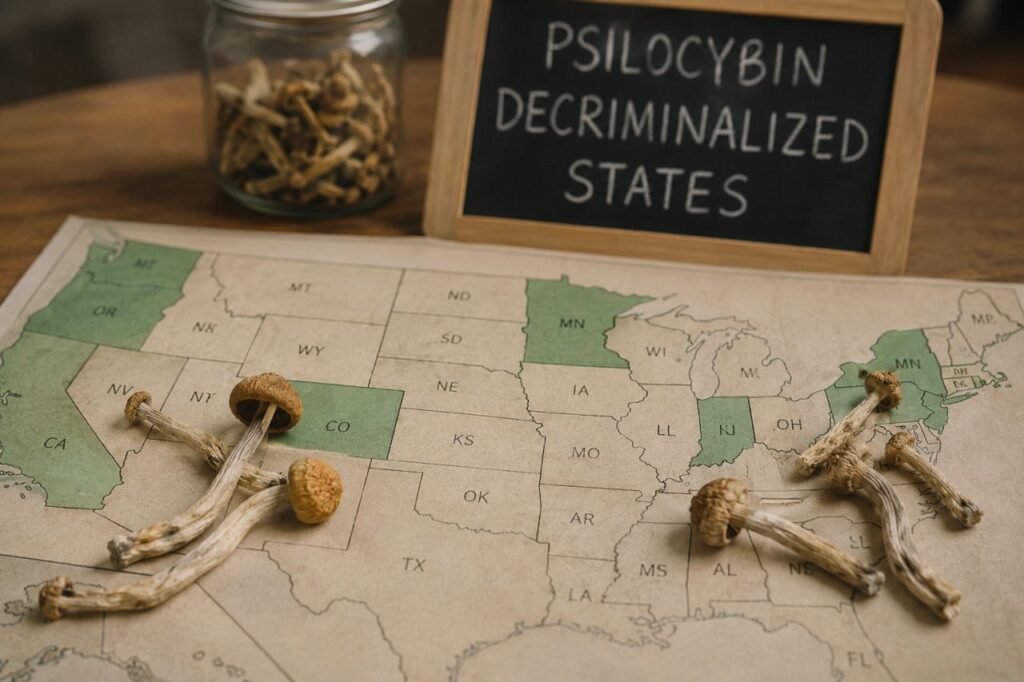
States where psilocybin is decriminalized have become a major topic of discussion as psychedelic policy reform continues to increase across the United States. Over the past years, several states and cities have reduced criminal penalties related to psilocybin possession and personal use, while others have introduced supervised therapeutic programs focused on mental health treatment.
Although psilocybin remains illegal under federal law, local governments and voters in different parts of the country have begun shifting toward more progressive approaches. These changes are largely influenced by scientific research, public support for alternative mental health therapies, and increasing conversations around drug policy reform within these areas.
Decriminalization does not necessarily mean psilocybin is completely legal. In most cases, it means possession and personal use are treated as low law enforcement priorities or carry reduced penalties when you have possessions. Commercial sales and large scale distribution may still remain illegal in many areas.
What Does Psilocybin Decriminalization Mean?
When a state or city decriminalizes psilocybin of any form, it usually means authorities reduce or remove criminal penalties for possessing small amounts intended for personal use only not for commercial purpose. Instead of arrests or jail time, individuals may face reduced fines or no criminal charges at all depending on local area regulations.
This differs from legalization, where governments create regulated systems for production, sales, and supervised use. Decriminalization is generally viewed as the first step toward broader psychedelic reform.
Oregon
Oregon became the first U.S. state to establish a legal psilocybin services program while also reducing penalties for possession of small amounts of certain psilocybin drugs.
In 2020, Oregon voters approved Measure 109, allowing licensed facilities to provide supervised psilocybin services for adults over the age of 21. The state also passed Measure 110, which shifted its approach toward treatment and harm reduction rather than criminal punishment. Oregon’s model is widely considered one of the most advanced psychedelic reform systems currently operating in the United States.
Colorado
Colorado approved the Natural Medicine Health Act in 2022, making it one of the leading states in psychedelic reform. The law allows adults aged 21 and older to possess, cultivate, and share certain natural psychedelics, including psilocybin, for personal use. Colorado also began creating regulated healing centers where supervised psychedelic sessions may eventually be offered legally.
This marked another significant milestone in the movement toward alternative mental health treatments and drug policy reform.
California Cities
Although California has not passed statewide psilocybin decriminalization laws, several cities have taken independent action.
These cities include:
- Oakland
- Santa Cruz
Oakland became one of the first cities in the country to decriminalize entheogenic plants and fungi in 2019. Santa Cruz later adopted similar policies focused on reducing enforcement priorities related to natural psychedelics substance.
Washington D.C.
Washington approved Initiative 81 in 2020, making enforcement against entheogenic plants and fungi among the city’s lowest law enforcement priorities. The initiative reflected growing public interest in psychedelic reform and harm-reduction approaches.
Michigan Cities
Several cities within Michigan have also adopted local decriminalization measures. These include:
- Ann Arbor
- Detroit
- Hazel Park
These local reforms generally focus on reducing criminal penalties for adults possessing small amounts for personal use.
Massachusetts Cities
In Massachusetts, some cities have also moved toward reducing enforcement priorities related to psilocybin. Examples include:
- Cambridge
- Somerville
- Northampton
These city level reforms continue to reflect changing public opinions around psychedelics and mental health treatment.
Why Psilocybin Laws Are Changing
Interest in psilocybin reform has increased because researchers continue studying its potential therapeutic effects especially on mental health. Some scientific studies have explored whether psilocybin assisted therapy may help certain mental health conditions under professional health care supervision. Advocates also argue that public health approaches may be more effective than criminal punishment for non violent drug possession. States where psilocybin is decriminalized continue to expand as conversations around psychedelics, mental health, and criminal justice evolve. Oregon and Colorado currently lead statewide reform efforts, while multiple cities across the country have introduced local decriminalization policies.
Because these laws change frequently, it is important for individuals to stay updated through official state and local government sources. Understanding the distinction between decriminalization and legalization is also essential when following developments related to psilocybin policy in the United States.
