
No products in the cart.
Uncategorized
How Psilocybin Affects the Brain
13
May
May
How psilocybin affects the brain is a topic that has gained major attention in modern neuroscience and mental health research. Magic mushrooms, also known as psilocybin mushrooms, contain a naturally occurring compound called psilocybin, which the body converts into psilocin after ingestion. Psilocin is the active compound responsible for the effects on perception, mood, and cognition.
Unlike many substances that simply stimulate or depress the nervous system, psilocybin interacts with the brain in a more complex way. It temporarily changes how different regions of the brain communicate with each other, leading to altered perception, emotional processing, and thought patterns.
This article explains, in simple terms, what happens inside the brain when psilocybin enters the system.
How Psilocybin Affects the Brain and Its Conversion in the Body
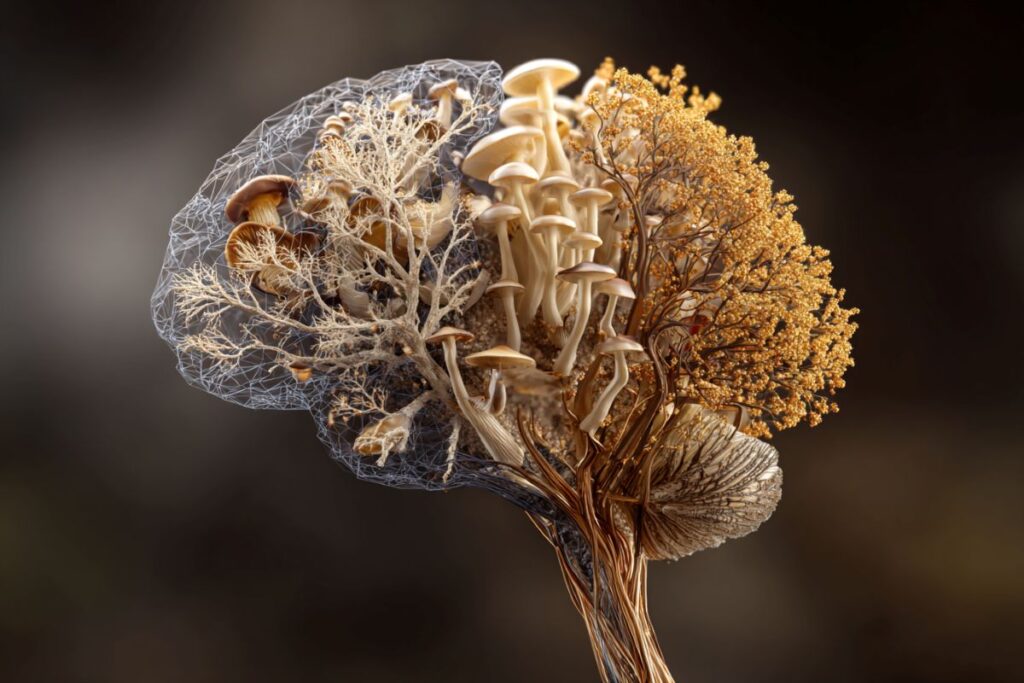
When magic mushrooms are consumed, psilocybin is broken down in the digestive system and converted into psilocin. Psilocin is structurally similar to serotonin, a key neurotransmitter in the brain.
Because of this similarity, psilocin can bind to serotonin receptors, especially the 5-HT2A receptor, which plays a major role in mood regulation, perception, and cognition. Once psilocin enters the bloodstream and reaches the brain, it begins to influence how neurons communicate.
Interaction With Serotonin Receptors
The primary mechanism of psilocybin’s effect is its interaction with serotonin receptors, particularly:
- 5-HT2A receptors
- 5-HT1A receptors (to a lesser extent)
When psilocin binds to these receptors, it does not simply “turn them on” in a normal way. Instead, it disrupts regular serotonin signaling patterns. This disruption leads to changes in perception, emotional intensity, and thinking patterns.
In simple terms, psilocybin temporarily “rewires” how the brain processes information.
Changes in Brain Connectivity
One of the most important discoveries in modern research is how psilocybin affects brain connectivity.
Under normal conditions, the brain has organized networks that handle specific tasks. For example:
- The default mode network (DMN) is involved in self-reflection and ego identity
- Other networks manage vision, movement, and sensory processing
Psilocybin reduces activity in the default mode network and increases communication between brain regions that don’t usually interact strongly.
This leads to:
- Less rigid thinking patterns
- Increased sensory blending (colors, sounds, emotions may feel interconnected)
- A breakdown of the “ego boundary” or self-focused thinking
This is why users often report a sense of “ego dissolution” or feeling connected to everything.
Increased Brain Entropy (More Flexibility)
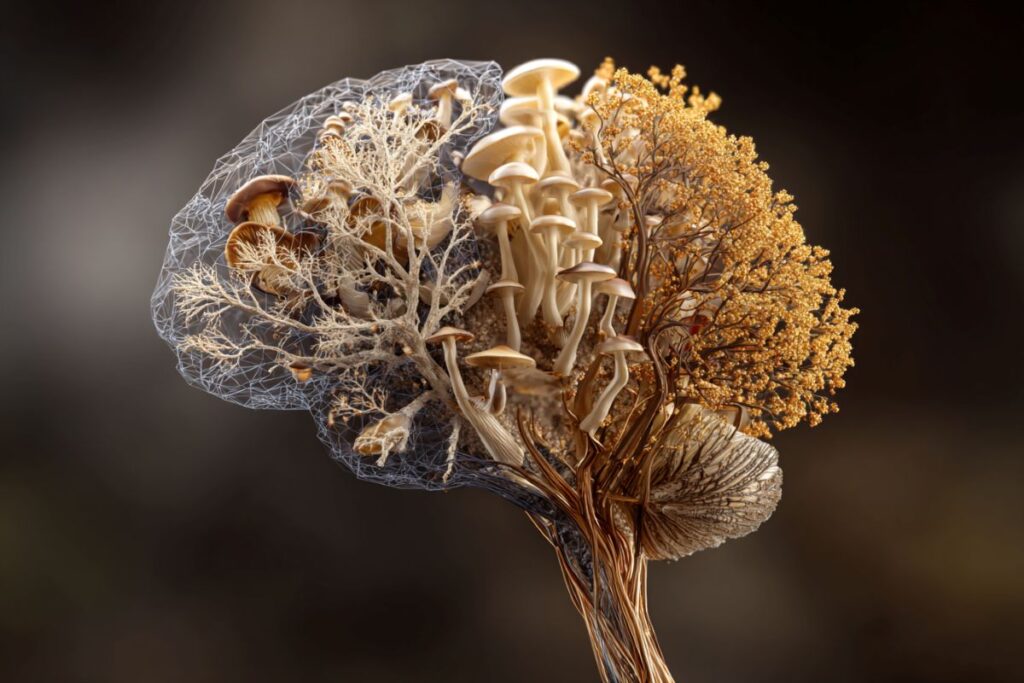
Neuroscientists describe psilocybin’s effect as increasing brain entropy, meaning the brain becomes more flexible and less predictable in its activity patterns.
In normal waking consciousness:
- Brain activity is structured and stable
Under psilocybin:
- Brain activity becomes more dynamic and less restricted
This increased flexibility allows the brain to form new connections and explore alternative patterns of thought.
This is one reason psilocybin is being studied for conditions like depression, where thought patterns can become rigid and repetitive.
Emotional Processing and Memory Access
Psilocybin also affects how the brain processes emotions. It can:
- Intensify emotional responses
- Bring suppressed memories or feelings to awareness
- Reduce fear-based responses in some brain circuits
The amygdala, a region involved in fear and emotional reaction, may show altered activity during psilocybin exposure. This can change how emotionally charged memories are experienced.
Visual and Sensory Changes
The visual cortex becomes more active and less filtered under psilocybin. This can lead to:
- Enhanced colors and patterns
- Distorted perception of time and space
- Visual hallucinations in higher doses
These effects occur because the brain is processing sensory information in a less way than usual.
Long-Term Effects on the Brain
Although psilocybin’s immediate effects are temporary, research suggests it may have longer lasting effects on brain plasticity.
Studies indicate it may:
- Increase neural growth and connectivity
- Help “reset” rigid neural pathways
- Support long-term mood improvement in clinical settings
However, these effects depend heavily on controlled, therapeutic use and are still being studied.
